What is called a funeral service?
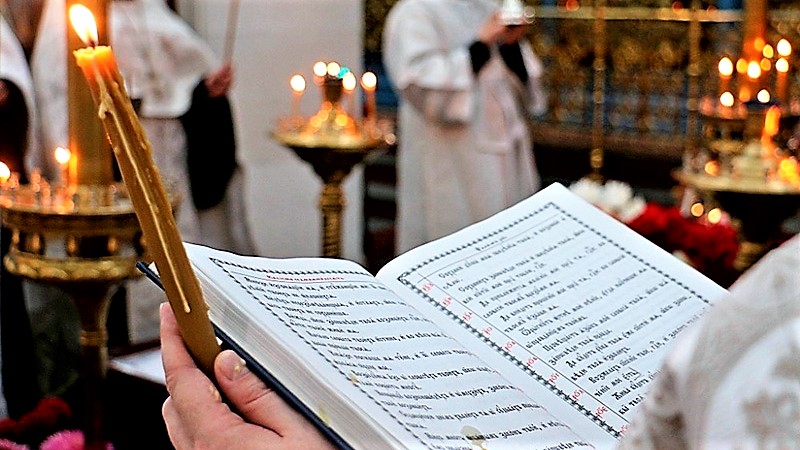
A funeral service is a prayer order established by the Church for parting words and seeing people off to another world. The funeral service is a popular name that was given to this rite because more than half of the prayers are sung in it. The correct name for the funeral service is “deathly succession.” The carrying out of this rite testifies to the fact that the deceased belonged to the Orthodox community, and now people gathered in order to lead him on the last earthly journey. If the deceased was a member of the Orthodox Church, if he was engaged in his spiritual life, if he confessed and received communion (at least sometimes), if he, at least minimally, participated in the life of the community – the Church can admonish him.
What should be done during the funeral service?
Be in love! Prayer for the deceased should come not only from the mouth, but also from the heart of a loving person. He also must prove his love not only by word, but also by deed. Love is determined by the degree of human sacrifice. How to prove your love? Work for the soul of the one who himself can no longer work for it. Anyone can read the Psalter about the newly departed. You need to read Kathisma a day, and not just mechanically read, but try to understand what you are reading about – this is the first thing. The second is the Akathist for the one-dead, which has a unique content. It should also be read after reading the Psalter, for forty days. And in some cases, if there is such an opportunity, you can read the Psalter and Akathist together. For example, the Psalter in the morning, and the Akathist in the evening. And, of course, you need to read these wonderful prayers not lying on the couch, but seriously, with an understanding of who you are reading them in front of. And, of course, if possible, it is necessary to do charity, deeds of mercy for the deceased. It is this, and not the demonstrative and non-demonstrative manifestations of grief, which twist the soul, is a real indicator of love for the deceased.
How is the funeral service going?
It is customary for the Orthodox to be buried in a coffin, which remains open until the end of the funeral service (if there are no special obstacles for this). The funeral service and burial are usually performed on the third day. The first day is the day of death itself. That is, if a person reposed on Tuesday before midnight, then it is customary to bury him on Thursday, and if on Saturday, then on Monday. and who is united with Christ in her holy Sacraments, is under the protection of Christ, under the protection of the Church – she will pray for his soul to the end of the century. This cover is adorned with inscriptions with texts of prayers and excerpts from Holy Scripture, the image of the banner of the cross and angels. Relatives ask for forgiveness for involuntary offenses, apply to the icon on the chest of the deceased and to the crown on the forehead. In the case when the funeral service takes place with the coffin closed, they kiss the cross on the lid of the coffin. At the end of the funeral service, after reading the Apostle and the Gospel, the priest reads a prayer of absolution. After reading the permissive prayer, farewell to the deceased takes place. Relatives and friends of the deceased with a bow walk around the coffin with the body.
What does the corolla on the head of the deceased mean?
A paper whisk is a symbol of the crown, a symbolic designation of the fact that the deceased went into Eternal life as a warrior who won victory on the battlefield. The chaplet reminds us that the Christian’s exploits on earth in the struggle against all suffering, temptations, temptations and passions have ended, and now he expects a reward for them in the Kingdom of Heaven.